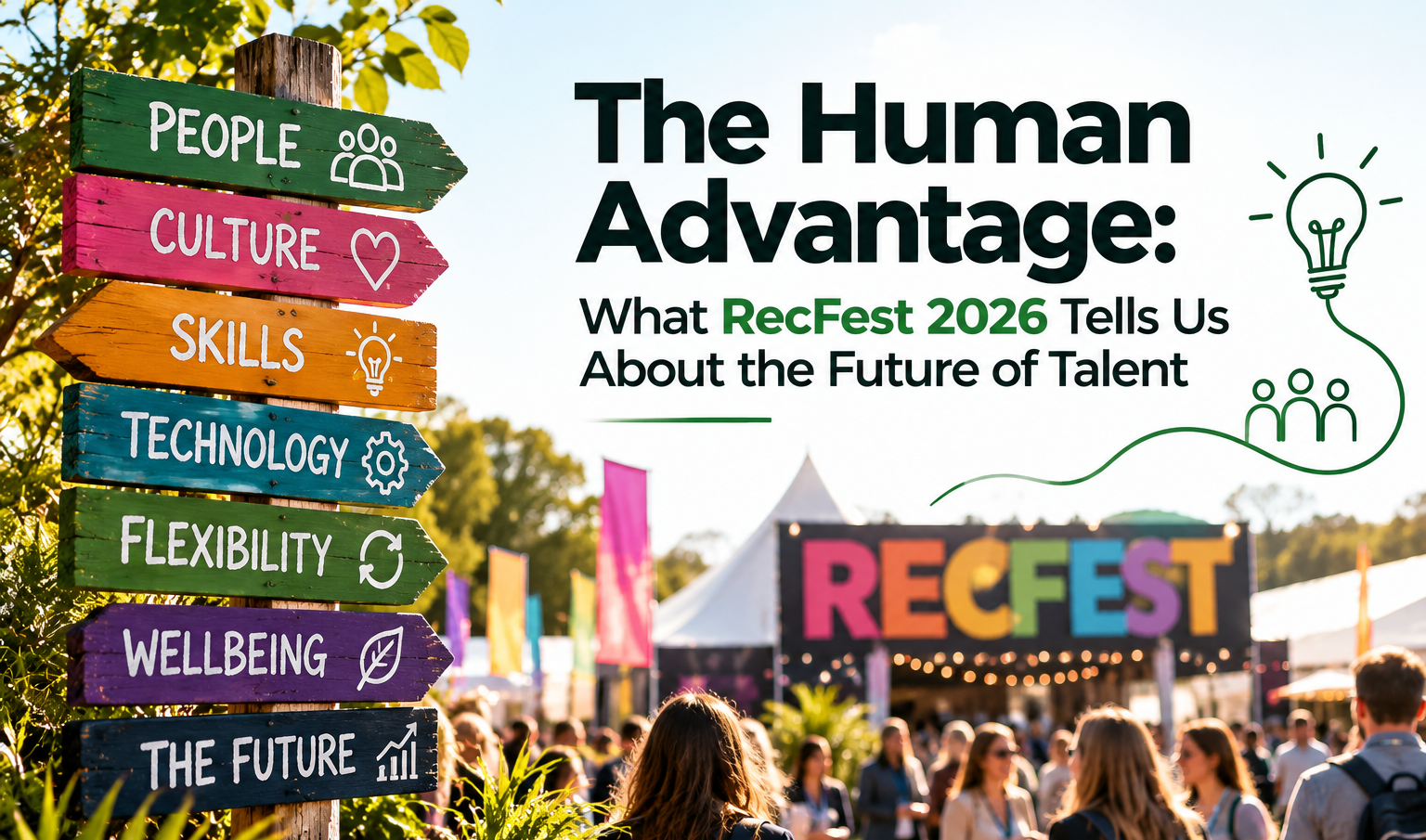
With RecFest USA bringing thousands of HR, Talent Acquisition and People professionals to Nashville on September 23–24, there is an important conversation taking place about the evolving role of HR and Talent in the business.
The role of HR has changed considerably. What was once largely an administrative function has evolved into a strategic business discipline encompassing talent, workforce planning, organizational capability and business performance.
Talent Acquisition has evolved with it. The strongest TA leaders today do much more than fill requisitions. They advise the business on skills, workforce availability, organizational needs and how quickly critical capability can be built.
RecFest is putting that evolution directly on the agenda this year. Its Idea Swap includes a TA Transformation discussion asking senior leaders what TA should own by 2030 and how the function can become a true strategic advisor to the business.
That evolution is particularly important as Operations faces a different set of challenges. Organizations are scaling infrastructure, launching facilities, expanding manufacturing and managing increasingly complex technical programs. At the same time, many remain cautious about simply adding permanent headcount.
The question is no longer just, “Who do we need to hire?” It is, “What does the business need to accomplish, and what capability will it take to get there?”
The Labor Market Is Sending Mixed Signals
The latest U.S. employment data illustrate why these matter.
The Bureau of Labor Statistics reported 7.4 million job openings in June, compared with 5.3 million hires. The national quits rate remained at 2.0%, suggesting a workforce that is relatively cautious about changing jobs.
But national numbers can obscure what individual organizations are experiencing. Demand varies considerably by industry, geography and skill set. An organization can operate in a relatively stable labor market and still struggle to secure the engineers, technicians, program leaders or specialized operational expertise required for a critical initiative.
This is particularly relevant in sectors experiencing significant investment and expansion. Data centers, semiconductors, advanced manufacturing and infrastructure projects require combinations of technical capability that cannot always be built quickly through conventional hiring.The business question therefore becomes broader than recruiting.
How do we make sure the organization has the capability to deliver what it has committed to deliver?
A Requisition Doesn't Always Tell You What the Business Needs
Consider an Operations leader requesting ten engineers.
The immediate response might be to discuss job descriptions, compensation, location, availability and time-to-fill. Those are all legitimate questions.
But several questions should come first.
Why are the engineers needed? Is this a permanent increase in workload or a temporary execution gap? Is the requirement tied to a facility ramp, product launch, deployment or specific program? Does the organization need ten individual contributors, or does it need a functioning technical team with leadership and accountability?
Those questions can produce very different workforce strategies.
Permanent hiring may be exactly the right answer. In other situations, the organization may need embedded specialists, a project team, managed capability or additional execution capacity for a defined period.
The strategic contribution from HR and Talent is helping the business understand the difference.
Hiring and Capability Are Not the Same Thing
This distinction becomes particularly important when operational timelines and hiring timelines do not align.
A new facility may have a fixed commissioning date. A customer deployment may already be committed. Production targets may have been established months earlier. A major engineering initiative cannot necessarily wait while every permanent position is recruited.
That does not make recruiting less important. It means workforce planning has to accommodate another variable: time.
A position filled three months from now may represent a successful recruiting outcome. If the business needed that capability today, however, the operational problem remains.
That is why HR, Talent and Operations increasingly need to consider the full range of ways capability can be built.
The Better Conversation Starts with the Outcome
When an operational leader brings forward a significant workforce requirement, start with the business outcome rather than the requisition.
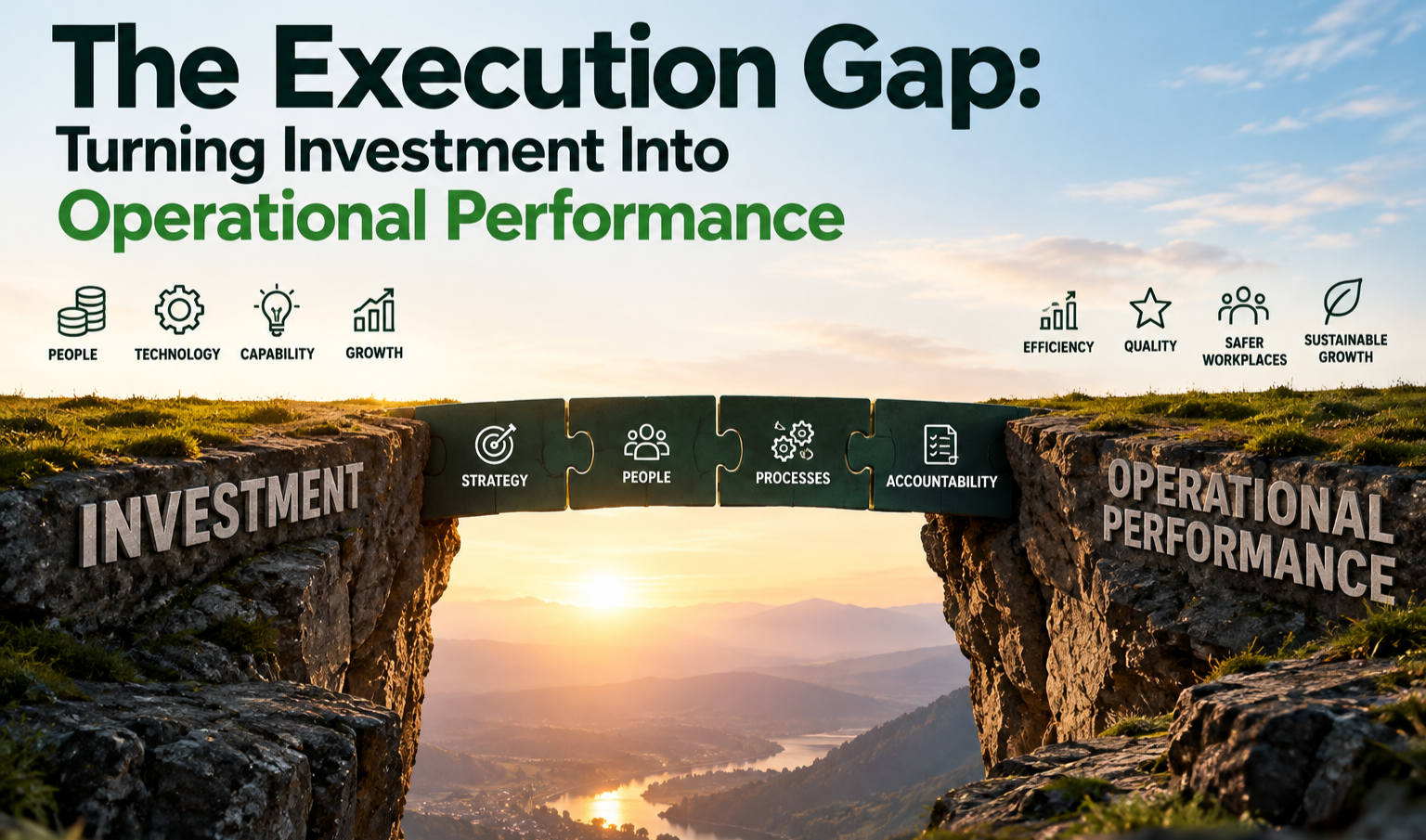
Understand what needs to be delivered, when it needs to happen, what capability already exists internally and where the genuine execution gaps are.
From there, the organization can determine the appropriate workforce model.
Some capabilities should unquestionably be built internally. Others may be needed during expansion, transformation or periods of unusually high demand. Some require individuals. Others require teams with their own leadership and accountability.
There is no universal answer.
The important thing is that the workforce model follows the business requirement, rather than the business requirement automatically becoming a recruiting requirement.
A Bigger Seat at the Table Requires a Broader View
There has been considerable discussion about HR and Talent earning a more strategic role within organizations.
In many organizations, that evolution is already well underway.
HR and Talent leaders have visibility into skills availability, compensation, workforce mobility and hiring difficulty that operational leaders may not have. Operations understands delivery schedules, technical dependencies, capacity constraints and where execution is most vulnerable.
Bringing those perspectives together can materially improve workforce decisions.
It also means being willing to consider the right workforce solution even when traditional recruiting is not the answer.
A filled position is a talent outcome. Increased execution capacity is a business outcome.
The strongest workforce strategies understand the difference.
From Workforce Requirement to Operational Capability
At Mackin Talent, we believe the most productive workforce conversations begin with what the organization is trying to accomplish.
That may lead to permanent hiring. It may require embedded technical resources, managed teams or additional operational capability during a critical period of growth. Increasingly, organizations need access to several models rather than relying on one.
Our role is to partner with HR, Talent and Operations to understand the business requirement and build the capability needed to support execution, operational continuity and measurable performance.
Mackin Talent will be at RecFest USA in Nashville, September 23–24. If you're attending, Contact Us to schedule time to meet. We'd welcome the opportunity to discuss the workforce and operational challenges facing your organization.