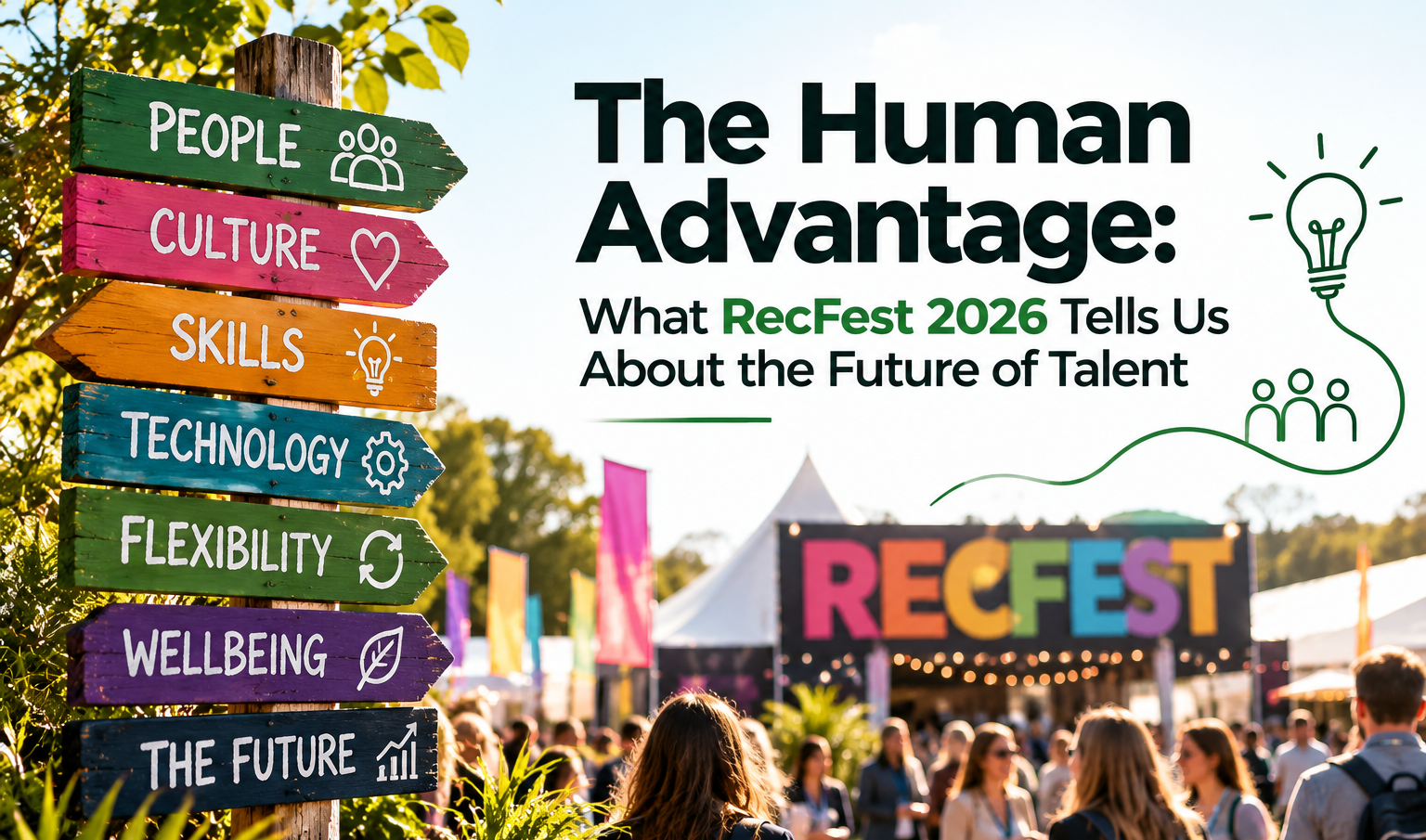
When HR and Talent leaders arrive in Nashville for RecFest USA on September 23–24, AI will inevitably be one of the biggest topics of conversation.
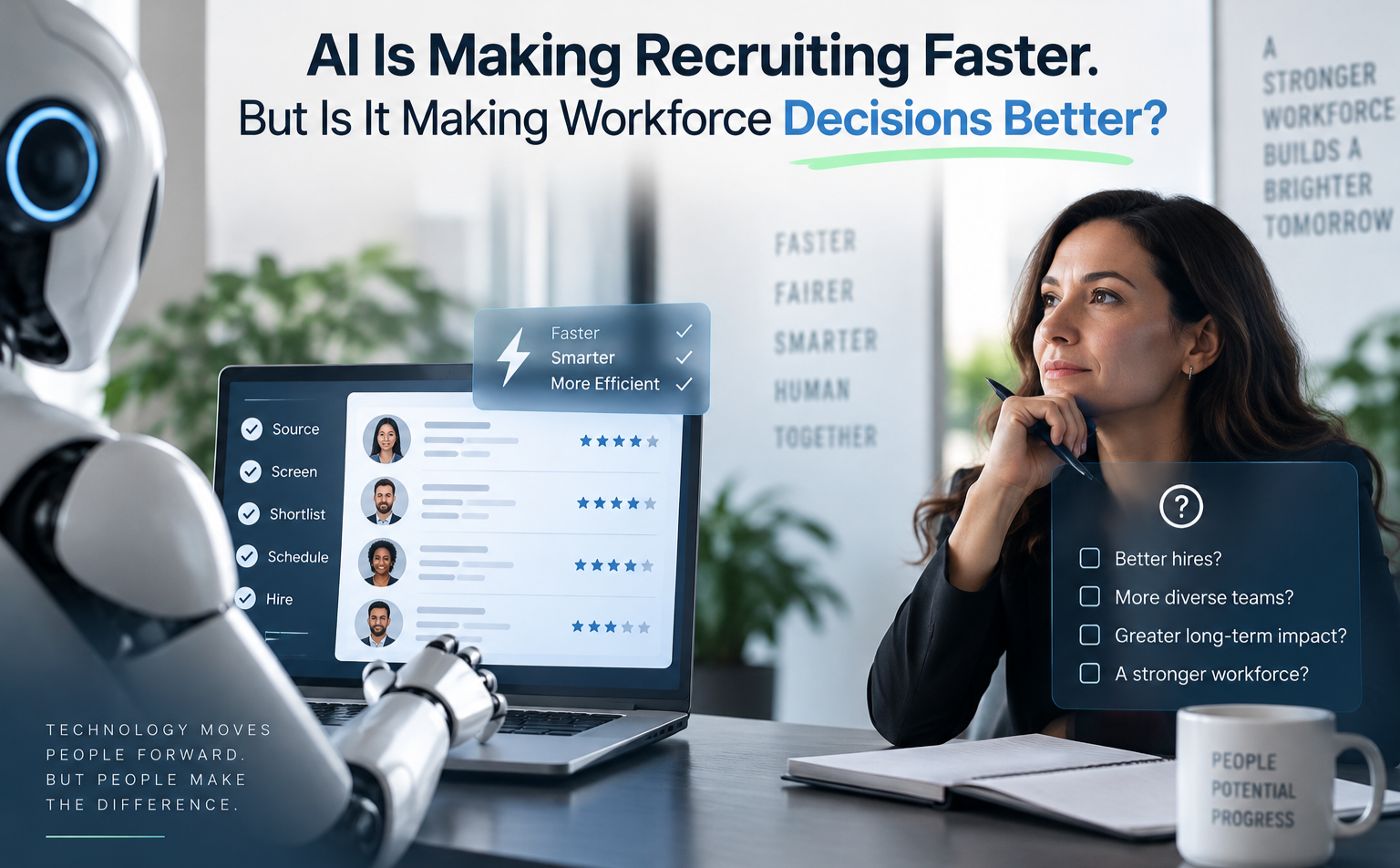
That is hardly surprising. AI is already changing sourcing, screening, scheduling, candidate communications and recruiting analytics. RecFest itself is taking a practical approach, with its AI Idea Swap focused on getting beyond the hype and identifying where automation actually delivers value.
But there is a bigger question worth discussing.
If AI makes recruiting faster and more efficient, how do we know whether it is actually helping organizations make better workforce decisions?
A Cooler Labor Market Doesn't Mean Talent Has Become Easy
The latest U.S. labor data presents an interesting picture for Talent leaders heading to RecFest.
The September 4 Employment Situation report from the U.S. Bureau of Labor Statistics showed that employers added 162,000 jobs in August and unemployment remained at 4.1%. Yet average monthly job growth over the previous 12 months was only 31,000.
The September 1 JOLTS report adds another dimension. U.S. employers had 7.3 million open positions in July but made only 5.1 million hires. Openings in durable-goods manufacturing increased by 76,000, while hiring in professional and business services declined by 188,000.
Indeed Hiring Lab's August 24 U.S. Labor Market Snapshot reached a similar conclusion. Overall job postings were just 1.8% above their February 2020 baseline by mid-August. Yet the national picture masks significant differences by occupation. Production and manufacturing postings, for example, increased 8% over the previous year.
For HR and Talent leaders, the message isn't that hiring has suddenly become easy.
It is that overall hiring demand has cooled while organizations can still face very specific capability constraints. A company may have more leverage in the broader labor market and still struggle to secure specialized engineering, technical or operational capability.
That distinction matters in semiconductors, advanced manufacturing, data centers and critical infrastructure, where specialized skills and operational timelines rarely follow national averages.
A softer labor market may make more people available. It doesn't automatically make the right capability available at the right time.
AI Is Changing More Than the Recruiting Process
Against this backdrop, AI is accelerating another major change.
In its September 1 analysis, “How AI Will Transform the Talent Acquisition Function,” SHRM argues that AI's impact will extend beyond automating recruiting tasks. It expects AI to influence what recruiters do, how TA teams are organized, how success is measured and how the function contributes to workforce strategy.
That last point deserves more attention.
For years, recruiting performance has understandably been measured through metrics such as time-to-fill, cost-per-hire, offer acceptance and recruiter productivity.
Those measures still matter. But they primarily tell us how efficiently the recruiting process operates.
They don't necessarily tell us whether the business acquired the right capability, how quickly that capability became productive or whether the workforce decision improved business performance.
Recruiting efficiency and workforce effectiveness are related. They are not the same thing.
AI Could Give Talent Something More Valuable Than Speed
One of AI's greatest contributions may ultimately be the time it gives back to Talent teams.
Automating scheduling, communications, screening and administrative work should allow recruiters to spend less time managing process. That creates an opportunity to spend more time understanding the business.
This is particularly important in complex operating environments.
A Talent leader supporting a semiconductor operation, data center deployment or advanced manufacturing program needs more than an efficient recruiting engine. The leader needs to understand which skills are critical, where capability gaps could affect delivery and how quickly those gaps must be addressed.
That changes the conversation from recruiting activity toward workforce performance.
Perhaps We Need Different Measures
If Talent Acquisition is becoming more strategic, some of the measures used to evaluate it should evolve as well.
Time-to-fill will remain important. But what about time-to-productivity?
Requisitions closed tell us something about recruiting activity. But did the additional capability help a facility open on schedule, support a production ramp or protect a customer commitment?
Critical-skill coverage, speed-to-productivity and operational impact begin to tell us something different. They connect Talent decisions to what the business was trying to accomplish in the first place.
Filling 20 positions quickly is a positive recruiting result. If the program remains behind schedule because the organization still lacks the right capability, however, the business problem has not been solved.
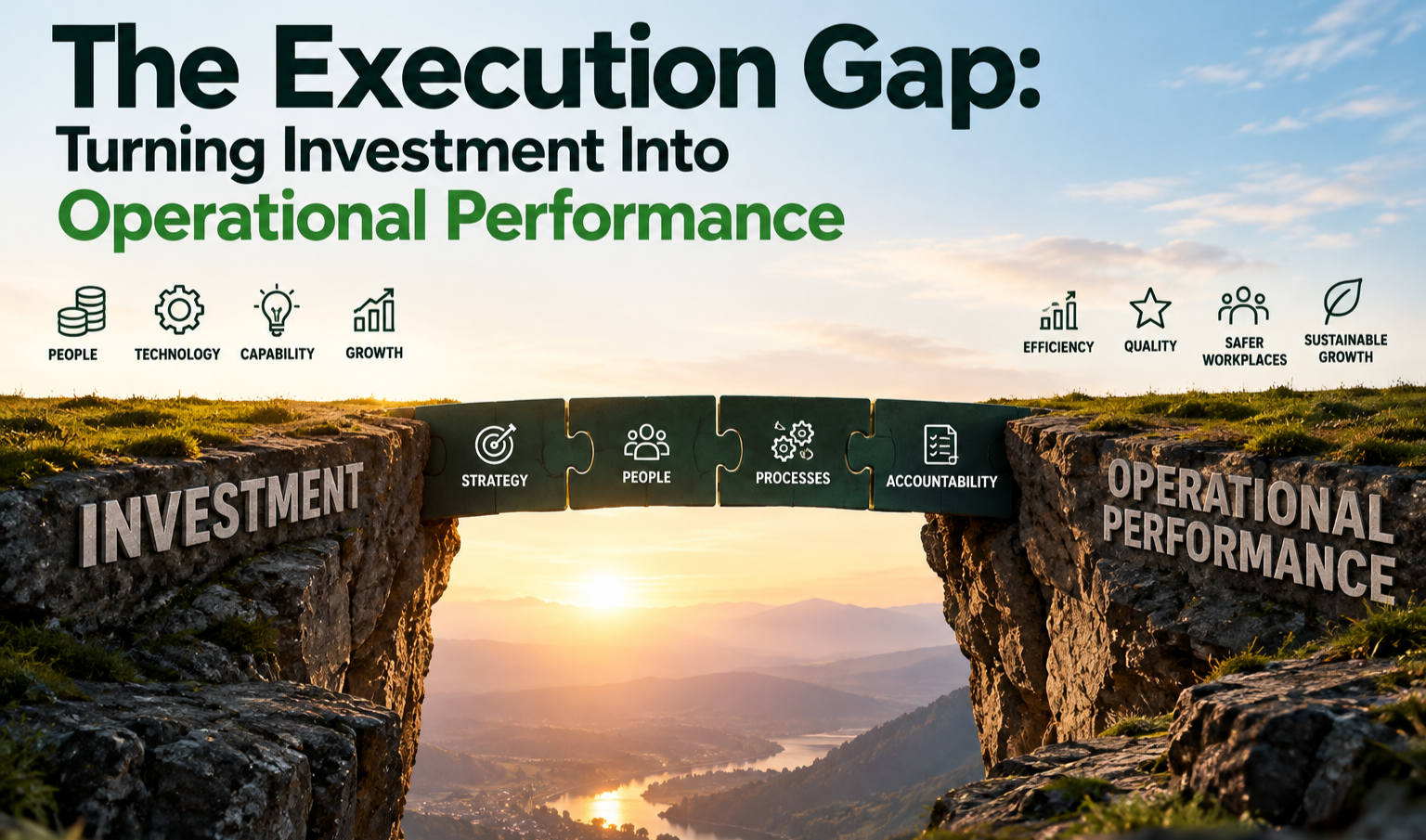
The next generation of Talent metrics should tell us not only how efficiently people were hired, but whether the workforce decision improved the organization's ability to execute.
Better Technology Makes Judgment More Valuable
There is an interesting consequence of better recruiting technology.
As sourcing, matching and administrative processes become easier to automate, human judgment becomes more valuable.
SHRM's 2026 Talent Trends research reinforces this point. Eighty percent of HR professionals reported the greatest difficulty finding candidates with systems and resource-management skills, including judgment, decision-making and complex problem-solving.
Those are also precisely the capabilities that become more important as technology handles more transactional work.
AI can help identify candidates against a defined requirement. Experienced Talent leaders still need to understand the busines
is context surrounding that requirement.
Is the organization facing a permanent skills requirement or a temporary capacity constraint? How quickly does the capability need to become productive? What happens operationally if it arrives too late? Does the business need individual resources, or does it need a team with leadership and accountability?
Technology can provide better information. People still have to make the decision.
The Opportunity for Talent Leaders
The AI conversation at RecFest will rightly include tools, implementation, automation and candidate experience.
But there is an opportunity to take the conversation further.
If AI removes significant amounts of transactional work, HR and Talent leaders can use that capacity to become more deeply involved in workforce planning, operational priorities and business performance.
The strongest Talent functions won't simply use AI to process more candidates or fill positions faster. They will combine better technology with better judgment and a deeper understanding of what the business needs to accomplish.
That may ultimately be AI's most valuable contribution to Talent Acquisition.
AI can make recruiting faster. The competitive advantage will come from using the time, information and insight it creates to make better workforce decisions.
Let's Continue the Conversation at RecFest
Mackin Talent will have several members of our leadership team at RecFest USA in Nashville, September 23–24, including CEO Andy Mackin.
We're looking forward to meeting HR and Talent leaders who are thinking about where the function goes next, from AI and critical skills to workforce strategy and supporting increasingly complex business requirements.
If you're attending RecFest, we'd love to meet. Reach out to schedule time with Andy and the Mackin team while we're in Nashville.