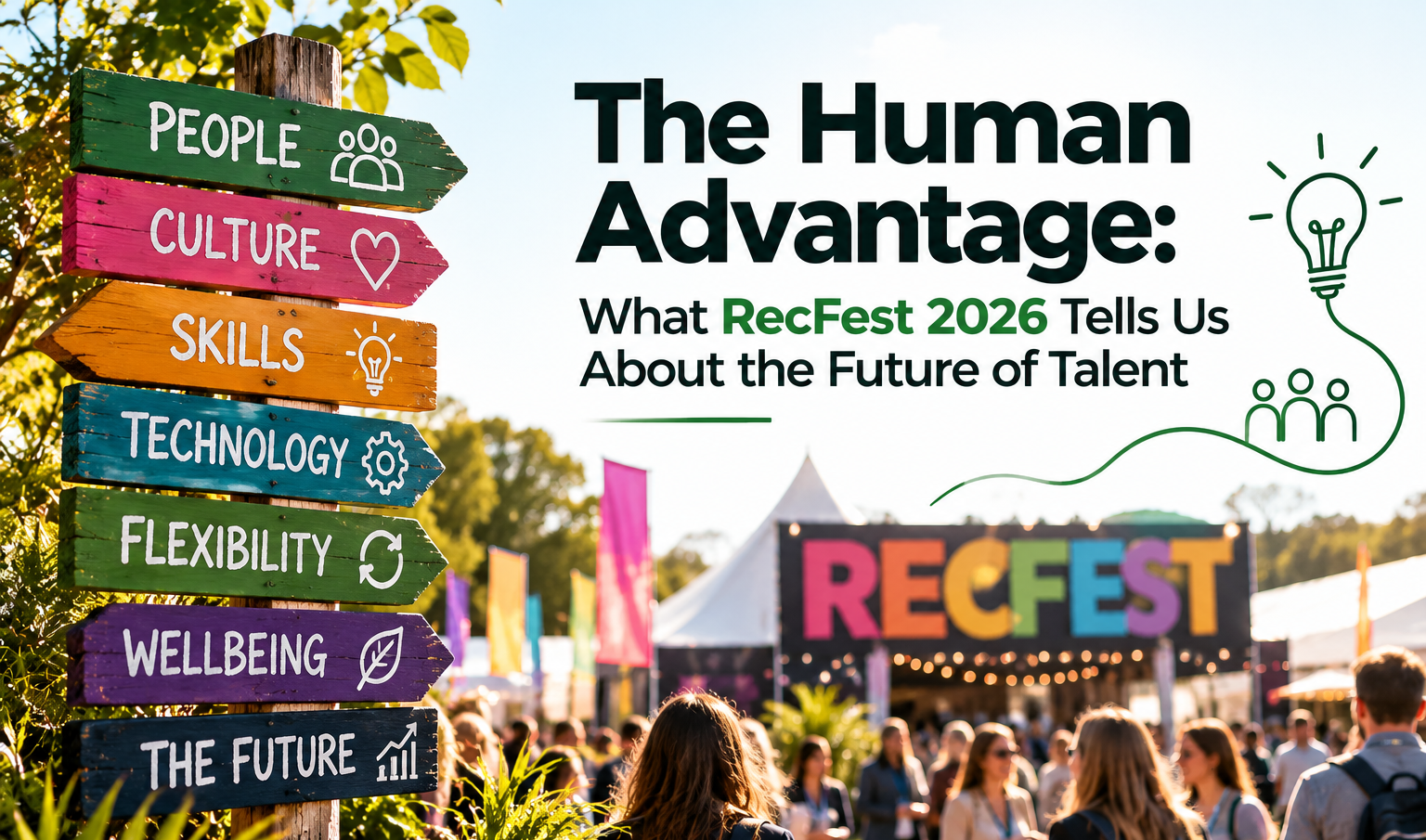
Anyone attending RecFest USA 2026 in Nashville could see how quickly Talent Acquisition is changing.
AI was everywhere.
Mackin Talent CEO Andy Mackin attended alongside Brandy Blanton and Fernanda Amaya, giving the team an opportunity to hear directly from Talent and HR leaders, explore emerging recruiting technologies and compare those conversations with what Mackin is seeing in the market.
RecFest brought together more than 2,500 attendees, 80+ speakers and 85+ exhibitors. Appropriately, the theme for 2026 was the “Human Advantage” and the role people will play in an increasingly automated world.
The technology was impressive. But one of the more important conclusions from the event was not about technology at all.
As more of recruiting becomes automated, the value of human judgment, business understanding and relationships may actually increase.
AI Has Moved from Experimentation to Everyday Recruiting
Brandy came away struck by the sheer number of recruiting technologies now available and how quickly AI has become embedded in Talent Acquisition. Fern saw organizations using AI throughout the recruiting process, including interviews.
That experience was reflected across the event.
AI-enabled sourcing, screening, candidate identification, automation and interviewing were prominent themes. One post-event report described a particularly revealing moment during a session on what parts of recruiting should become automated and what should remain human. When an attendee argued that candidate interviews should remain human, the room applauded.
The significance isn't that organizations should reject AI. They shouldn't.
The more useful question is where technology creates the greatest value and where human involvement matters most.
Automation Changes the Value of the Recruiter
For much of the AI conversation, attention has focused on which recruiting tasks technology can perform faster.
There is another side to that equation.
If AI can reduce the time recruiters spend sourcing, screening, scheduling and completing administrative work, what should organizations do with the capacity it creates?
Increasingly, the answer coming from Talent leaders is to move recruiters closer to the business.
RecFest's own 2026 content described the evolving TA professional as combining AI with human judgment, business insight and strategic thinking. Attendee commentary from Nashville reinforced that point, highlighting the importance of understanding the business behind a hiring request, learning the language of operations and finance, advising hiring managers and connecting hiring recommendations to business outcomes.
That could prove to be one of AI's more significant effects on Talent Acquisition.
The recruiter of the future may spend less time administering the hiring process and more time helping the business make better workforce decisions.
AI Is Also Creating a Trust Problem
Technology is creating new risks alongside those efficiencies.
Fern identified candidate impersonation as one of the topics that stood out at RecFest. Post-event reporting from the show floor similarly highlighted fake applicants, candidate fraud and growing interest in identity verification being integrated directly into recruiting platforms.
AI can now help candidates optimize applications and prepare for interviews. At the more problematic end of the spectrum, technology can also make misrepresentation and impersonation more sophisticated.
Employers therefore face a new challenge.
How do you take advantage of AI-enabled recruiting without losing confidence in the person and capabilities behind the application?
Technology will undoubtedly play a role in solving that problem. But verification tools alone do not replace judgment, interaction and trust.
Relationships Still Matter
Perhaps one of the most revealing observations from the Mackin team came from conversations rather than presentations.
Fern said attendees were pleasantly surprised to discover that Mackin was a human-led workforce business rather than another technology platform. Mackin's “Relationships Matter” message also resonated with people at the event.
Brandy reached a similar conclusion. Despite being impressed by the technology available, she came away believing that relationships remain something technology cannot replace.
Again, this is not an argument against AI.
Technology should eliminate unnecessary work, improve access to information and allow Talent teams to operate more effectively.
But organizations should be equally deliberate about what they don't automate.
RecFest's broader 2026 content has emphasized this same balance: AI can enable Talent teams to spend more time applying human judgment, insight and strategic thinking rather than simply replacing recruiters.
Faster Hiring Is Only Part of the Outcome
Fern also heard a very practical concern from Talent leaders: they need to hire faster.
Speed matters. Open positions can constrain growth, delay projects and increase pressure on existing teams.
But reducing time-to-fill doesn't necessarily mean the organization has solved the underlying business requirement.
This is where the conversation about AI becomes more interesting.
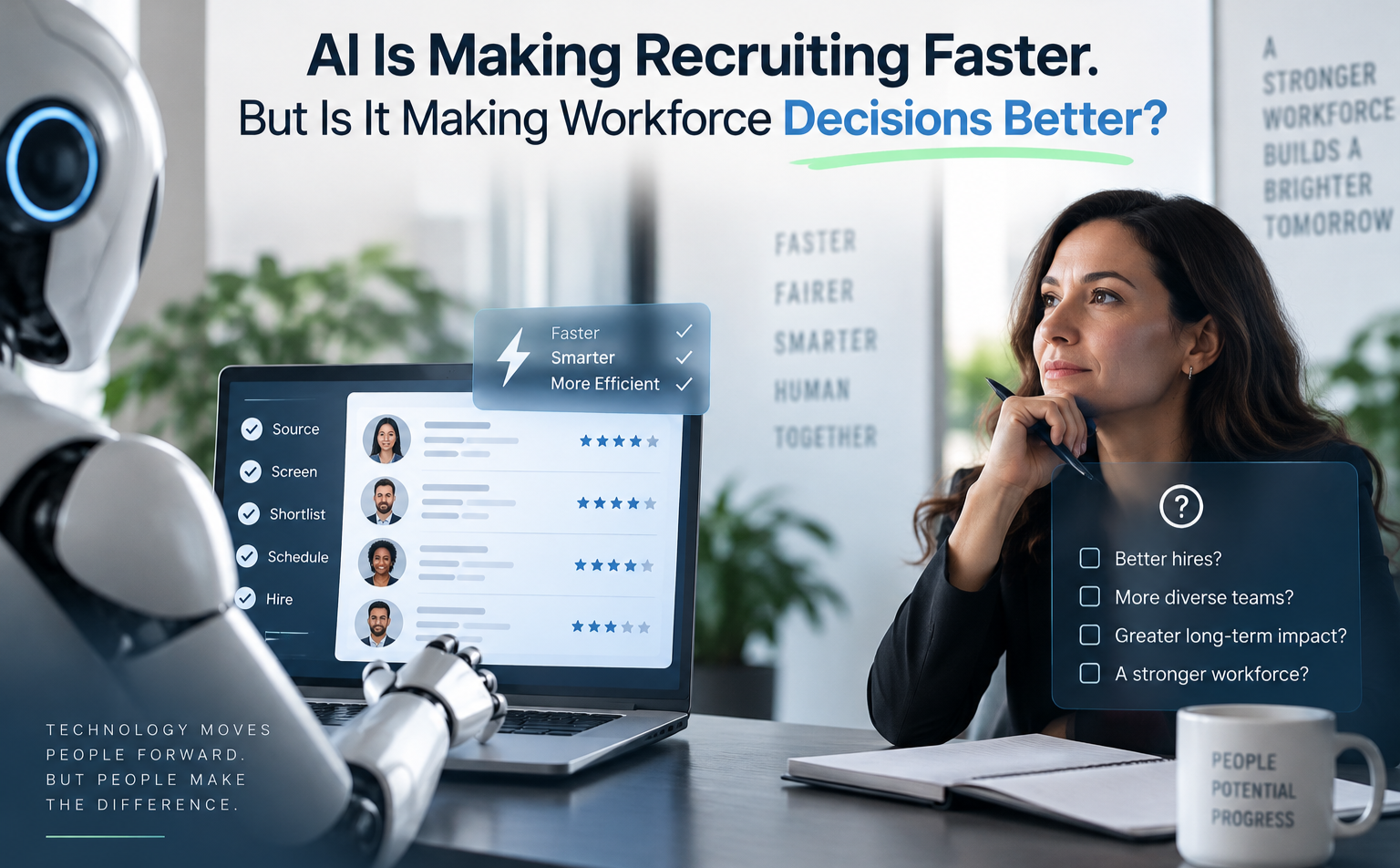
If technology allows an organization to source more candidates, screen them faster and move them through the recruiting process more efficiently, the process has improved.
But has the workforce decision improved?
Did the organization secure the capability it needed? How quickly did that capability become productive? Did it increase execution capacity? Did it help the business deliver the required outcome?
Those questions extend beyond recruiting efficiency.
From Filling Requisitions to Building Capability
This is where we believe the role of Talent can continue to evolve.
Instead of beginning every workforce conversation with:
Who do we need to hire?
There is value in beginning one step earlier:
What does the business need to accomplish, and what capability will it take to deliver it?
Sometimes the answer will be a permanent hire.
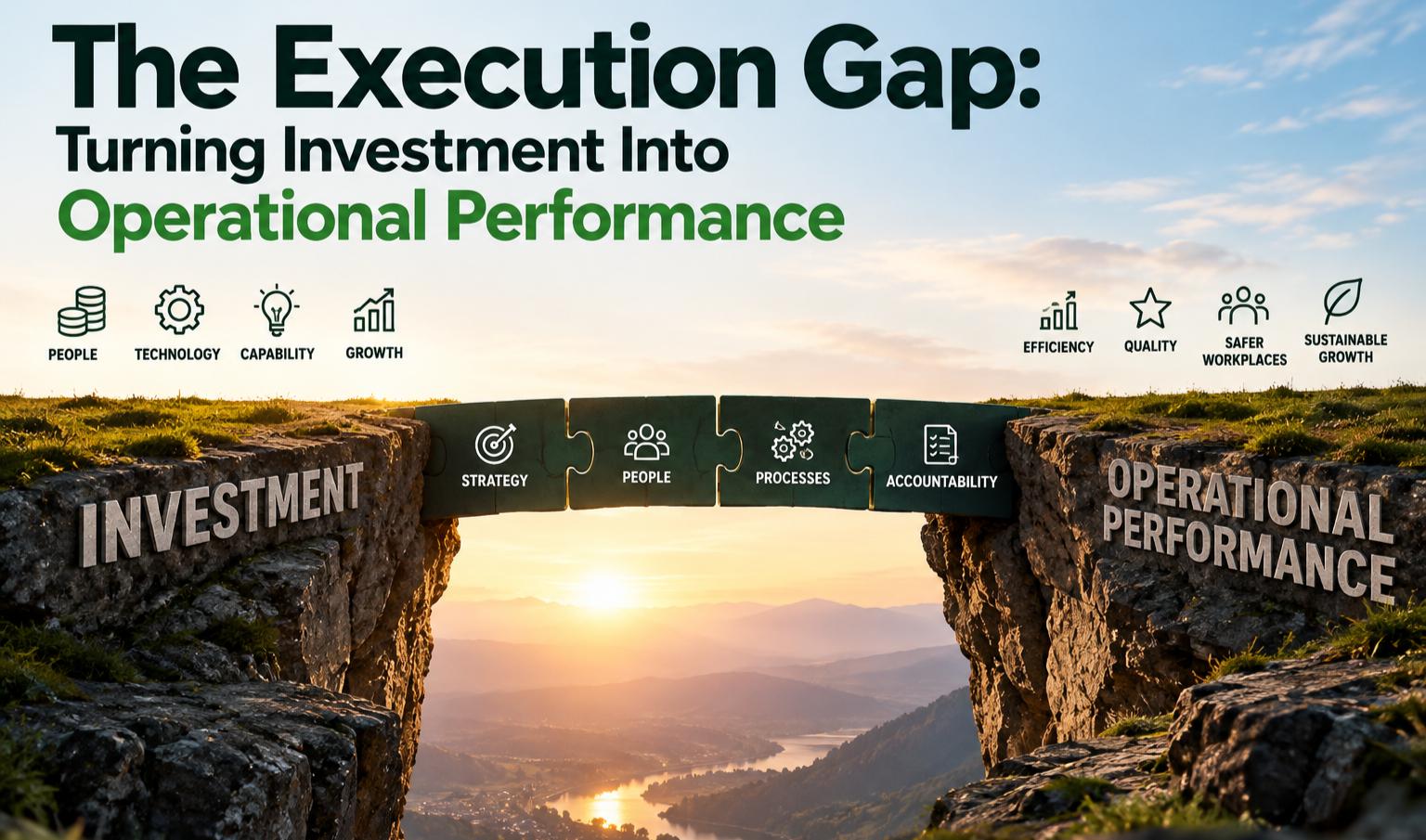
In other situations, the business may need specialist expertise, temporary execution capacity, an embedded team or a managed capability with leadership and accountability built around the outcome.
That is not a recruiting decision alone. It requires Talent, HR and Operations to understand the business requirement together and determine the most effective workforce model to support it.
This direction was visible in the broader RecFest conversation as well. Attendee observations emphasized understanding the business behind the hiring request and looking beyond traditional Talent metrics toward quality, business impact and shared accountability.
The Future of Talent May Be More Human, Not Less
AI will continue to transform recruiting. Based on what Mackin's team saw at RecFest, that transformation is already well underway.
The organizations that benefit most may not be those that automate the greatest number of recruiting activities.
They may be the ones that make the clearest distinction between what technology should do and where people create greater value.
Use AI to eliminate repetitive work. Use technology to improve speed and insight. Use data to make better-informed decisions.
Then use the capacity it creates to understand the business, exercise judgment, build relationships and make better workforce decisions.
Technology can make recruiting faster. The human advantage is turning that efficiency into better business outcomes.
At Mackin Talent, we believe technology should strengthen how people work, not replace the relationships, leadership and accountability required to deliver results. We partner with organizations to build and scale workforce capability through individual specialists, embedded teams and managed solutions aligned to the outcomes the business needs to achieve.
If your organization is reconsidering how it builds and scales capability in an AI-enabled environment, we'd welcome the conversation.
Further Reading
RecFest USA 2026: Human Advantage and event overview
Post-event RecFest USA Road Report
Live from RecFest USA: AI, candidate fraud and relationships
RecFest: Combining AI Enablement with Human Insight