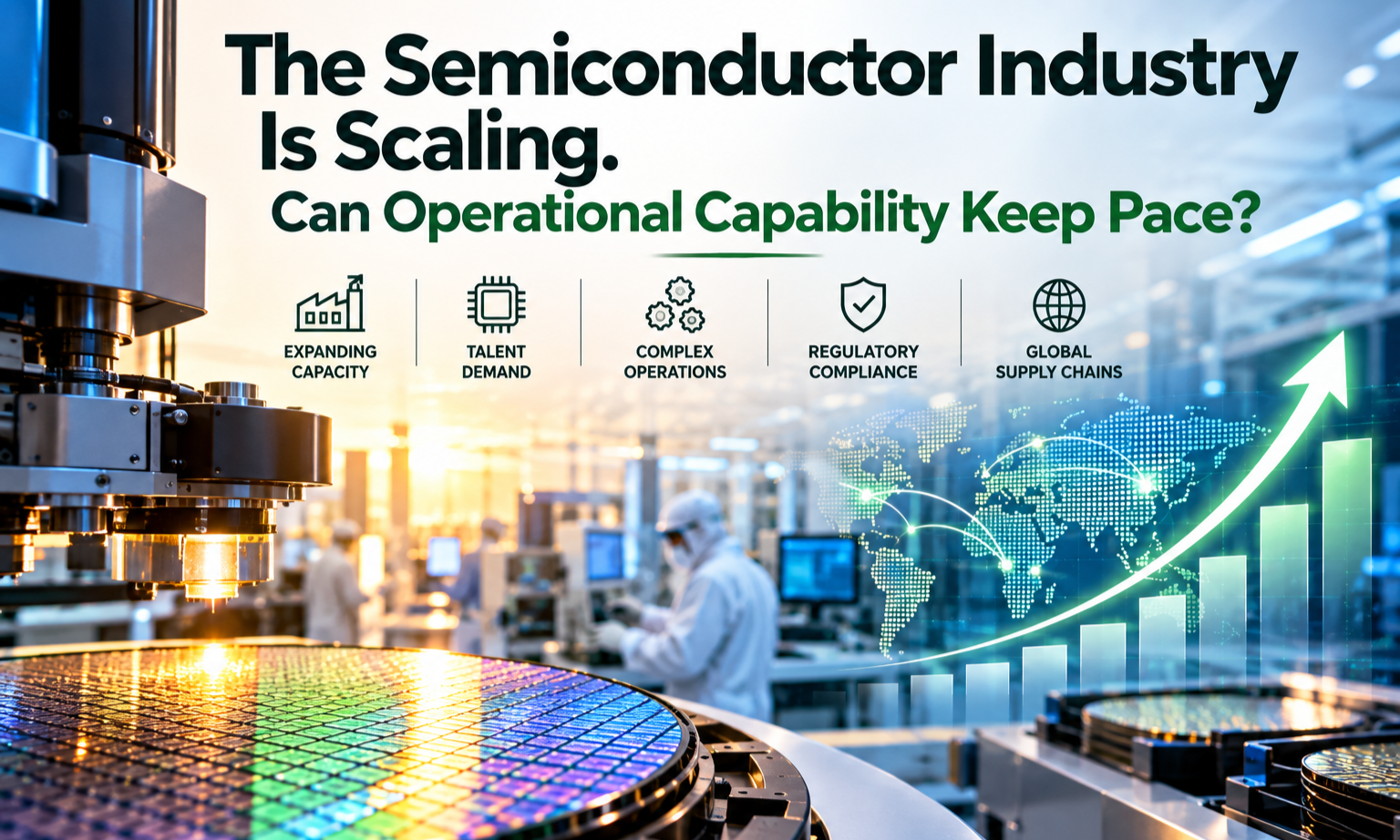
The semiconductor industry is entering an extraordinary period of growth.
Global semiconductor sales reached a record $795.6 billion in 2025, and current industry projections put worldwide sales at approximately $1.5 trillion in 2026. AI is a major driver, alongside continued demand for advanced computing, data infrastructure and increasingly sophisticated semiconductor-enabled technologies.
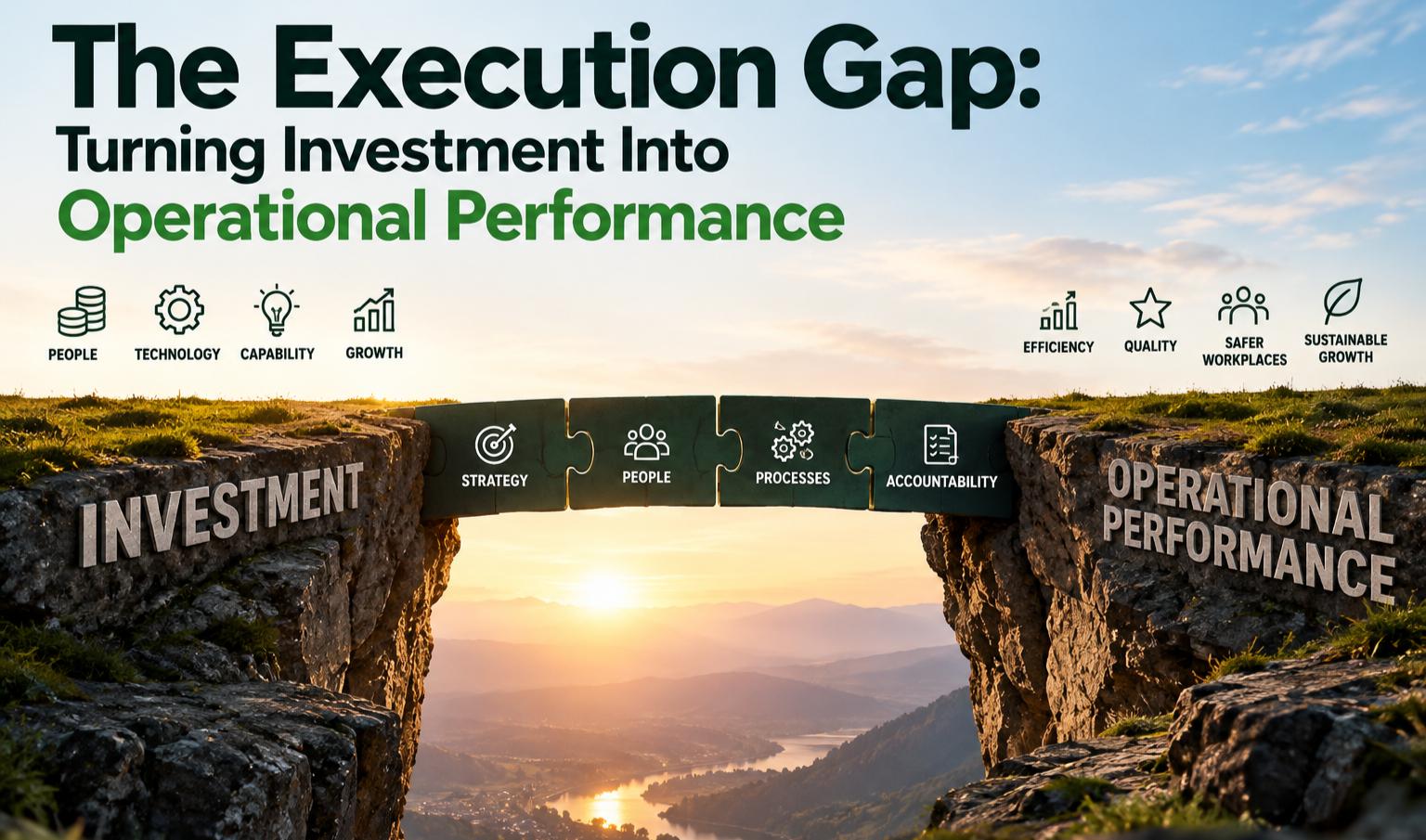
The investment required to support that growth is accelerating just as quickly.
SEMI's latest 300mm Fab Outlook projects global front-end fab equipment spending will reach a record $149 billion in 2026, up 31% year over year. Global semiconductor equipment billings also reached $40.53 billion in the second quarter of 2026, up 23% from a year earlier and marking a second consecutive record quarter.
The direction is clear. More capacity is being built, more advanced technology is being deployed and manufacturing environments are becoming increasingly sophisticated.
But that raises another question:
Can organizations build the operational capability required to keep pace with the physical capacity being created?
Capital Investment Is Only Part of the Equation
A semiconductor expansion can have the capital, land, equipment and technology it needs and still face significant execution challenges.
New fabs and expanded operations require people capable of designing, commissioning, operating, maintaining and continuously improving highly complex manufacturing environments.
That requirement extends well beyond semiconductor process engineers.
Facilities need electrical, mechanical and controls expertise. Equipment requires technicians and maintenance capability. Major expansions require project and program leadership. Manufacturing operations need quality, EHS, supply chain and technical support. Increasing automation adds requirements around software, data, systems integration and advanced manufacturing technologies.
Most importantly, those capabilities must come together at the right time.
A facility approaching commissioning or production ramp cannot simply wait indefinitely for every permanent position to be filled.
That is where unprecedented capital investment begins to intersect with one of the industry's most persistent constraints: workforce capability.
The Workforce Constraint Is Real
A widely cited Semiconductor Industry Association and Oxford Economics study projected that the U.S. semiconductor industry would need to add approximately 115,000 jobs by 2030, with roughly 67,000 at risk of going unfilled at prevailing degree-completion rates. Those potential shortages span technicians, engineers and computer scientists.
The industry is responding. New education, apprenticeship and workforce-development programs are being established. In May 2026, the SEMI Foundation and U.S. National Science Foundation launched the first four regional nodes of the National Network for Microelectronics Education, activating a network of more than 325 organizations focused on strengthening the U.S. microelectronics talent pipeline.
Those investments are essential to building the industry's long-term talent pipeline.
But companies expanding now face a more immediate question:
How do we build the capability we need while that future workforce is still being developed?
The Answer Isn't Simply More Hiring
Permanent recruitment will remain fundamental to semiconductor manufacturing. But workforce planning for rapid expansion cannot begin and end with the number of open positions.
Different stages of expansion create different requirements.
Construction and commissioning may demand significant engineering and program capability. Equipment installation and qualification create another set of needs. Production ramp creates others. Once an operation reaches steady state, the mix changes again.
Some of those capabilities should clearly reside permanently within the organization. Others may be specialized, project-driven or required at greater scale for a defined period.
That makes the workforce model itself an operational decision.
Leaders need to determine what capability should be built internally, where existing teams require additional capacity, when specialist expertise is needed and where an embedded or managed team may provide a more effective solution.
There is another consideration that can easily be overlooked.
Adding people does not automatically increase execution capacity.
If an already stretched engineering or operations leader must individually onboard, coordinate and manage every additional resource, some of the capacity being added is immediately consumed by additional management burden.
The objective should therefore be to increase productive capacity while maintaining clear leadership, integration and accountability.
Technology Is Changing the Capability Requirement
AI and automation add another dimension to the challenge.
SEMICON West's 2026 program reflects how quickly semiconductor manufacturing is evolving, with significant attention being given to digital twins, agentic AI, robotics, advanced packaging and increasingly autonomous manufacturing environments.
Automation may reduce the need for some activities, but it doesn't eliminate the workforce challenge. It changes the skills required.
Engineering, manufacturing, software, automation and data are increasingly intersecting. Organizations therefore need to consider not only today's vacancies, but the capabilities their operating model will require several years from now.
Workforce planning becomes less about maintaining a static list of positions and more about understanding what combination of skills, teams and leadership will be required to execute the business strategy.
From Investment to Operational Scale
This is one of the important conversations underlying SEMICON West 2026.
The industry has capital being deployed, facilities being built, equipment being purchased and technology advancing at extraordinary speed.
Now operational capability has to keep pace.
This year's SEMICON West program includes specific discussions around U.S. expansion, fab construction, supply chains, workforce development, advanced manufacturing and the resources required to support continued industry growth.
For semiconductor leaders, that means the workforce conversation needs to extend beyond headcount.
What capability will we need at each stage of expansion? Where could gaps slow execution? Which capabilities should we build internally? Where do we need specialized expertise or additional capacity? And as operations become more complex, who remains accountable for execution?
The semiconductor industry's next milestone will undoubtedly be measured in revenue, manufacturing capacity and technological advancement.
But converting unprecedented investment into productive capacity will depend on something less visible:
whether organizations can build operational capability at the same speed they are investing.
Mackin Talent will be at SEMICON West 2026, October 13–15 in San Francisco. We partner with organizations to increase execution capacity through embedded and managed engineering, technical and operational teams, supported by dedicated leadership and accountability.
If workforce scalability, operational readiness or execution capacity is part of your SEMICON agenda, we'd welcome the opportunity to meet in San Francisco.