Every growing company eventually reaches a point were adding more people no longer solves the problem.
At first, growth feels straightforward. Win more business, hire more people, add another facility, launch another product. The assumption is that if headcount keeps pace with demand, the business will continue to scale.
For a while, that's exactly what happens.
Then something changes.
Projects begin taking longer than expected, even though the organization has more people than ever before. Managers who were hired to lead spend much of their time coordinating meetings, resolving resource conflicts and helping teams work around bottlenecks. Engineers find themselves supporting multiple priorities instead of driving one initiative to completion. Decisions that once involved three people now involve twelve.
Nothing appears to be fundamentally wrong, yet the business somehow feels harder to run.
This isn't unusual. In fact, it's one of the most common characteristics of companies moving through a significant growth phase.
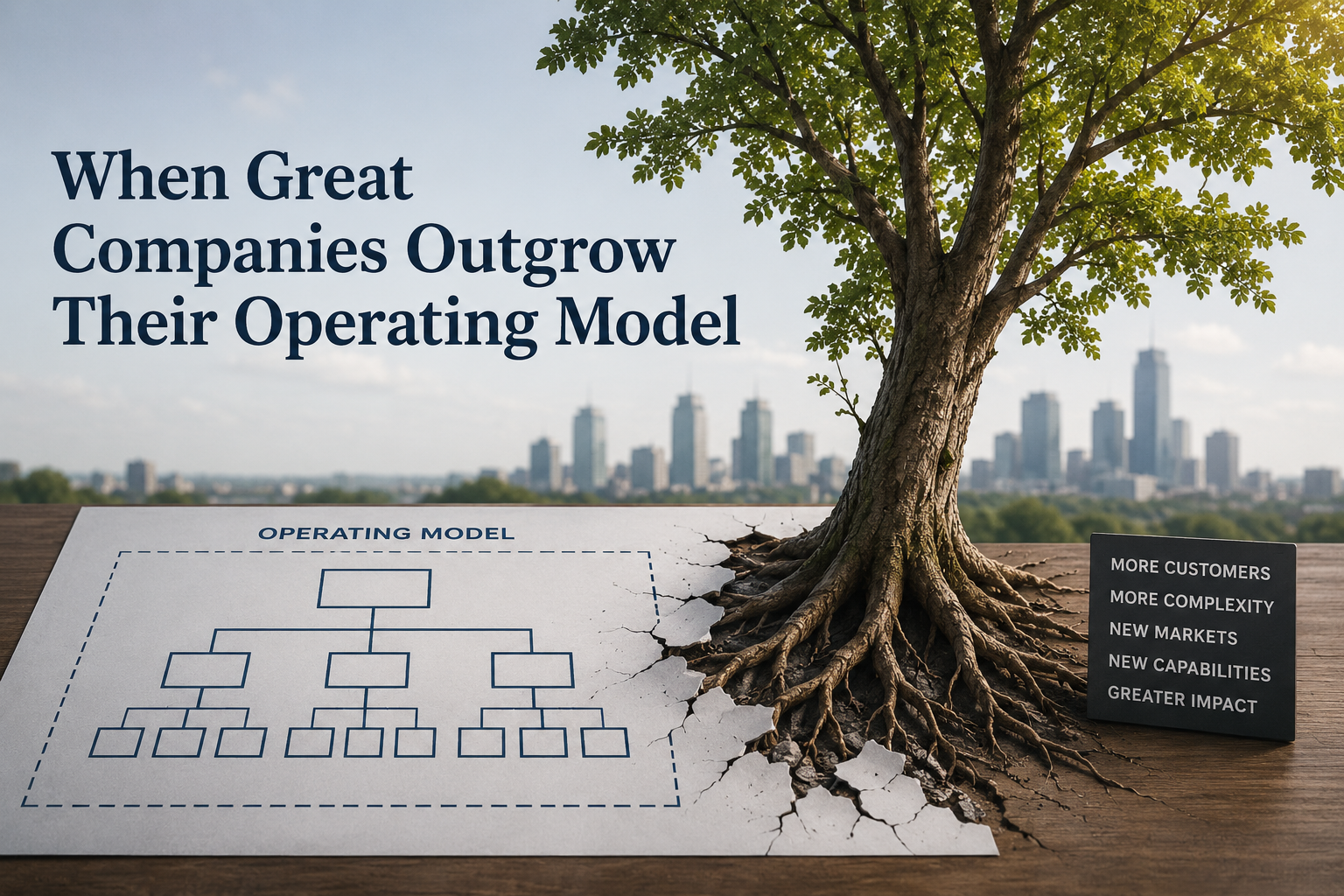
The mistake many organizations make is assuming they have a hiring problem when, in reality, they have an operating model problem.
Hiring is important. No growing business succeeds without bringing in talented people. But adding people doesn't automatically make an organization easier to manage or more effective at execution. Every new hire increases the need for communication, coordination, leadership and decision-making. As complexity grows, the operating model that supported yesterday's business often struggles to support today's.
This is particularly evident in industries such as semiconductors, aerospace and defense, advanced manufacturing, data centers and critical infrastructure, where organizations are often expanding facilities, launching multiple programs and serving increasingly demanding customers at the same time.
What worked when there was one manufacturing site may not work with five. What worked with two major customer programs may begin to break down when there are ten. The issue isn't capability. It's complexity.
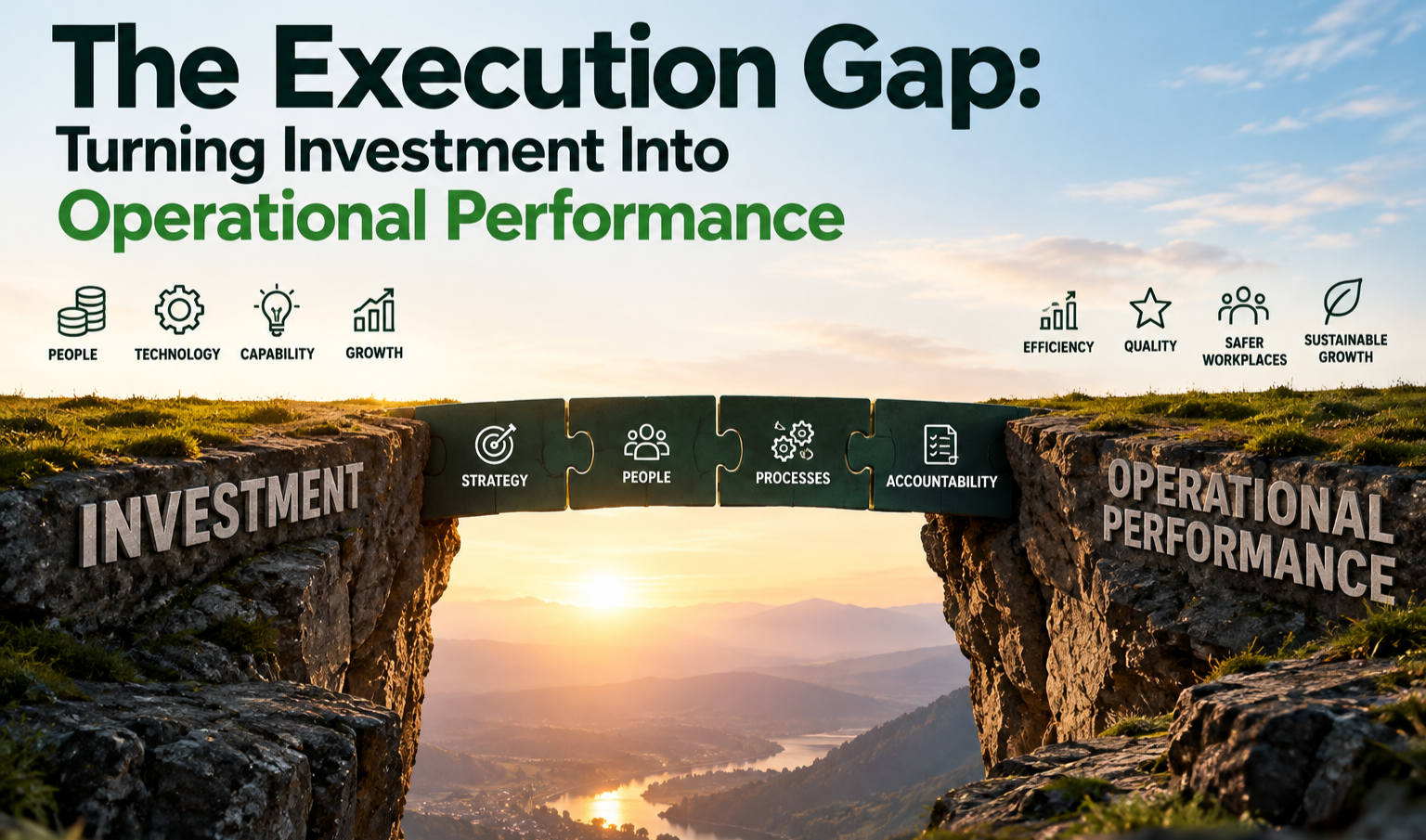
The organizations that navigate this transition successfully recognize that scaling a business involves more than increasing headcount. It requires deliberately strengthening the way work is organized, decisions are made and execution is managed.
That often means adding experienced operational leadership where it's needed most. It means improving program governance, strengthening engineering support, creating clearer accountability and ensuring that the people responsible for delivering critical work have the structure and support to succeed.
Perhaps most importantly, it means protecting the time of the organization's most experienced leaders.
One of the clearest signs that an operating model is under strain is when senior engineers, operations leaders and technical managers spend their days solving problems that should never have reached their desks in the first place. Instead of focusing on strategic priorities, they become the glue holding the organization together. It's effective for a while, but it isn't scalable.
The companies that continue to perform well through periods of rapid growth understand this. They don't wait until execution begins to suffer before strengthening the organization around it. They invest in the operational capability needed to support growth at the same time they invest in new facilities, equipment and people.
That's why the conversation eventually changes.
Instead of asking, "How quickly can we hire?" the better question becomes, "How do we ensure the business can continue to execute as it becomes larger and more complex?"
Those are very different conversations, and they lead to very different decisions.
At Mackin Talent, this shift is becoming increasingly common. More organizations are looking beyond recruitment and asking how to strengthen execution, reduce the burden on internal leadership and build the operational capability required to support long-term growth.
Because successful companies rarely run out of opportunity.
More often, they simply outgrow the way they operate.
Growth Doesn't Wait. Neither Should Your Operating Model.
The organizations that scale most successfully don't wait until execution becomes a challenge. They prepare for it.
Whether you're expanding manufacturing, launching new programs, opening new facilities, or supporting rapid business growth, Mackin Talent helps build the engineering, technical, and operational capability needed to execute with confidence.
Let's discuss how your organization is preparing for its next phase of growth.